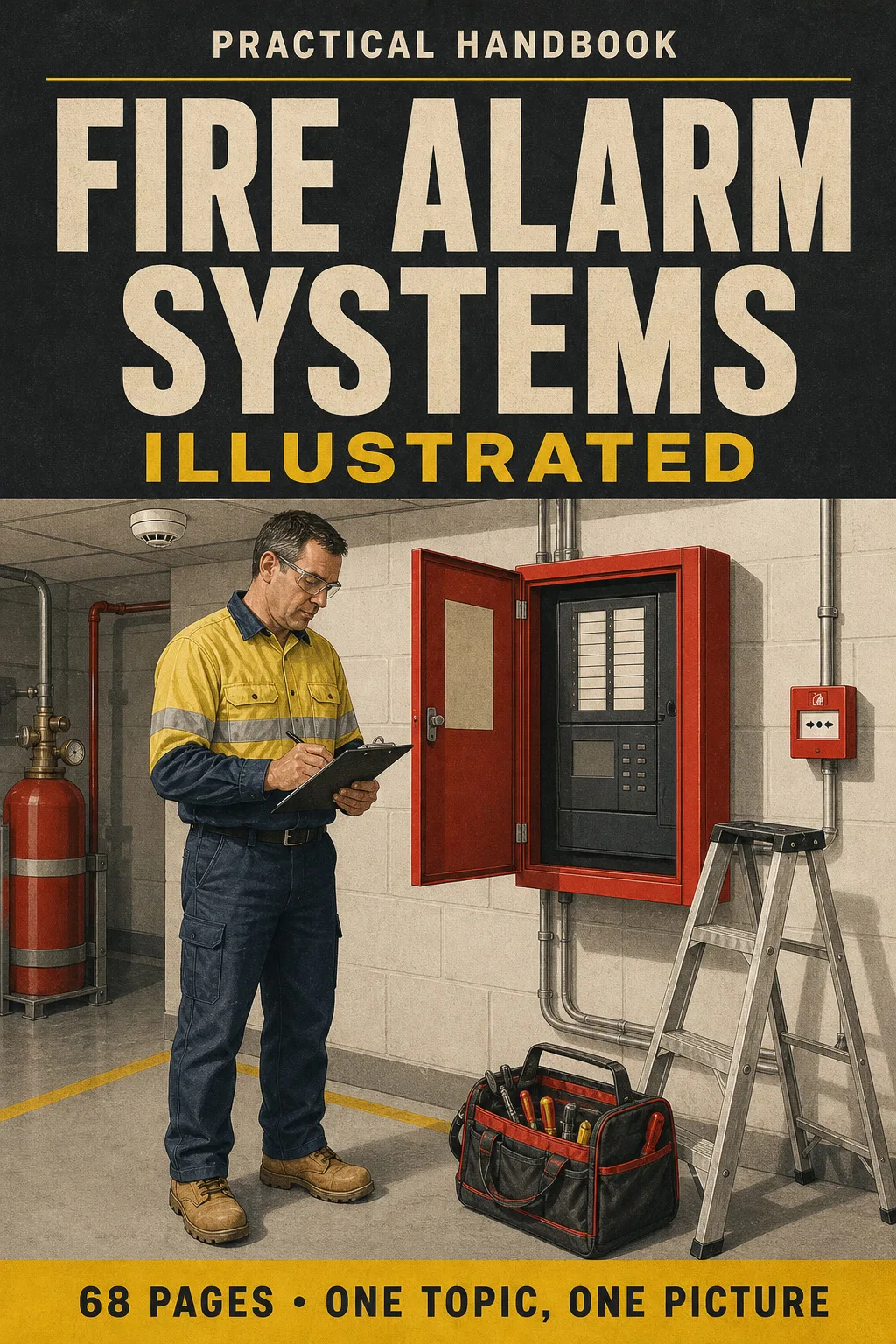
📄 Digital book in PDF · read it on your phone or print it
Detector types, spacing and coverage in metres, beams and sloping ceilings, the fire indicator panel, fire-rated cabling, battery standby, commissioning, inspect and test, and fault finding. Every topic has its own page: the drawing first, then what you need to remember. 68 illustrated pages.
🔒 Secure checkout · PDF by email · 30-day guarantee
Every page has one big drawing and a box with the distances, steps and intervals you need to know:


Swipe to see more →
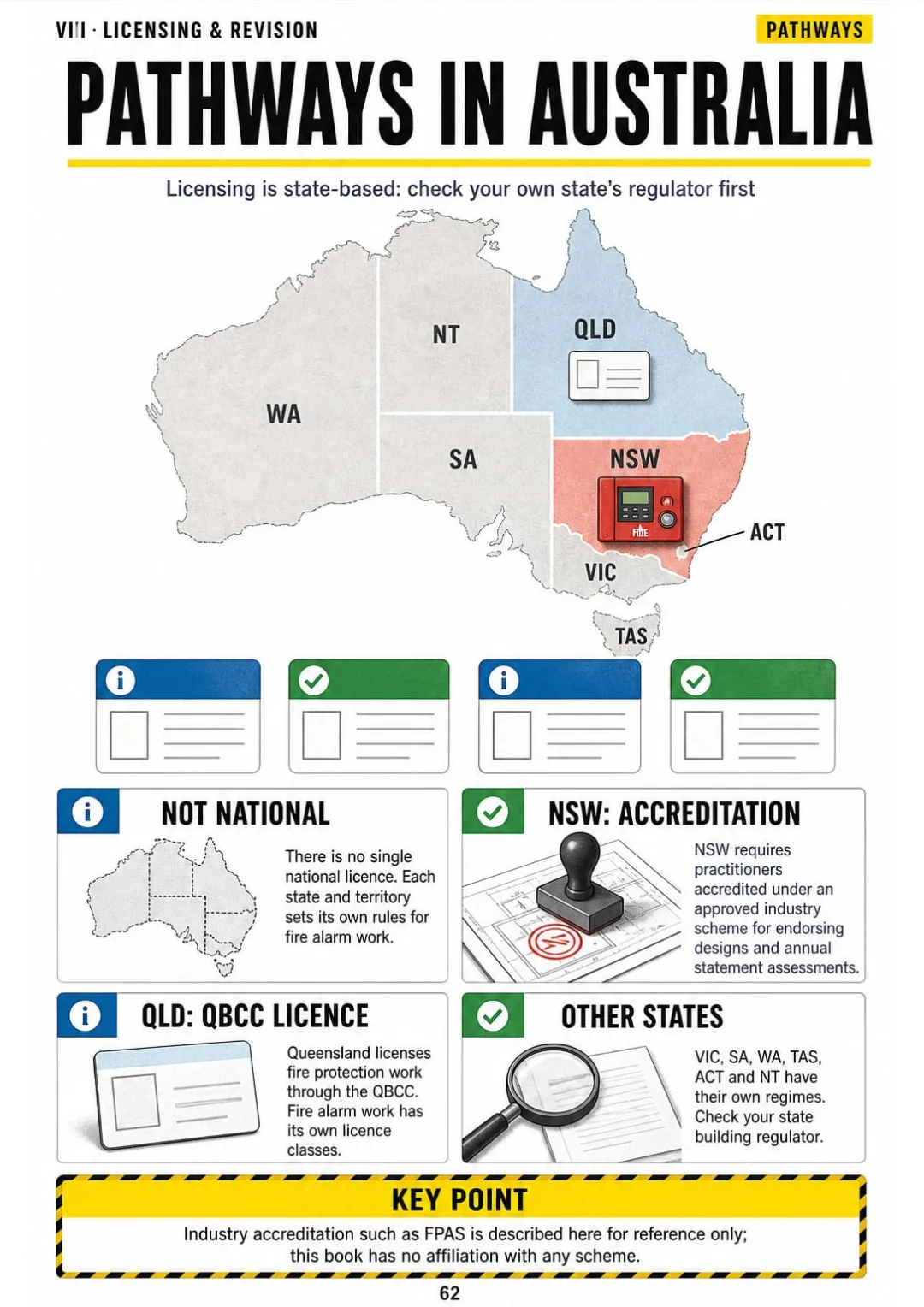
These are real pages from the book. The table of contents is the full one: 8 parts and 64 topics.
You're in the assessment, looking at an L-shaped office plan with a bulkhead across it, and the question looks simple: is every part of this ceiling covered?
You know there's a rule. But in the standard it's clauses and exceptions in paragraphs, and half your head still thinks in square metres per detector. Coverage doesn't work that way.

In the book, that same question is one page. The ceiling is drawn from above, the furthest point is marked, with a straight line to the nearest detector, and the limit in metres sits in a box beside it, checked against the current AS 1670.1.
The other tricky ones get the same treatment: beams and coffered ceilings, corridors, sloping roofs, battery standby, the AS 1851 intervals. Each one has its own page.
So you find the furthest corner, you measure to the nearest head and you answer without going back to the standard.

The system on one page, detectors, spacing and coverage, panel and warnings, cabling and power, install and commission, inspect and test, and accreditation and revision: 68 pages, all illustrated
Think of it this way:
A building manager walks you into a plant room with a dusty extract fan and asks which detector you'd put up there, and why.
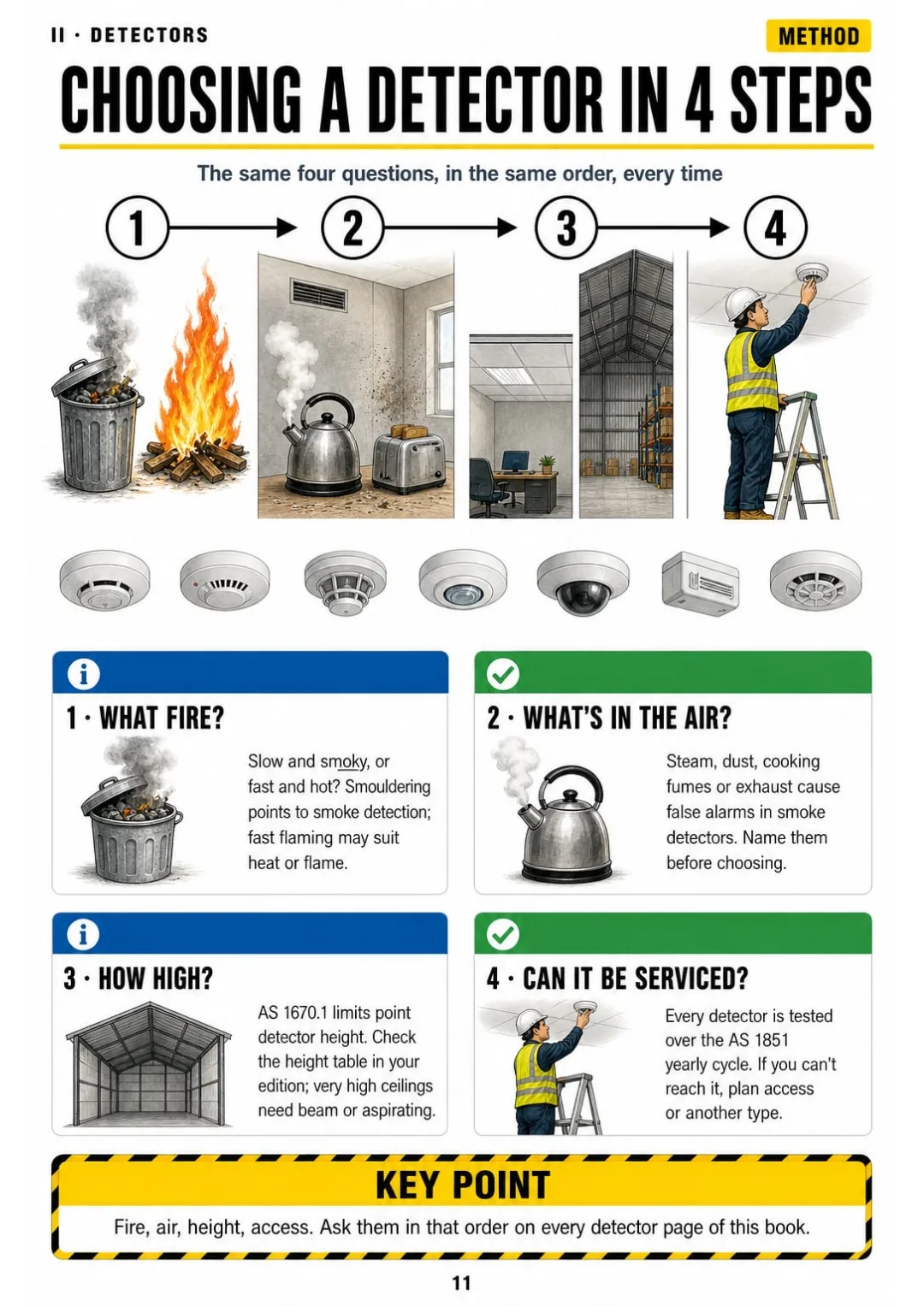
You open the book at that page and the answer is drawn in 4 steps, always in the same order: the expected fire, what's in the air, the ceiling height, and whether it can be serviced.

It's the same with coverage, the panel, the WS cable code, battery standby and the monthly visit: each one on its own page.
Fire Alarm Systems Illustrated is 8 parts and 68 illustrated pages, one topic per page, with a one-page spacing and battery revision and a final sign-off checklist at the end.
What you see drawn, you don't have to memorize.
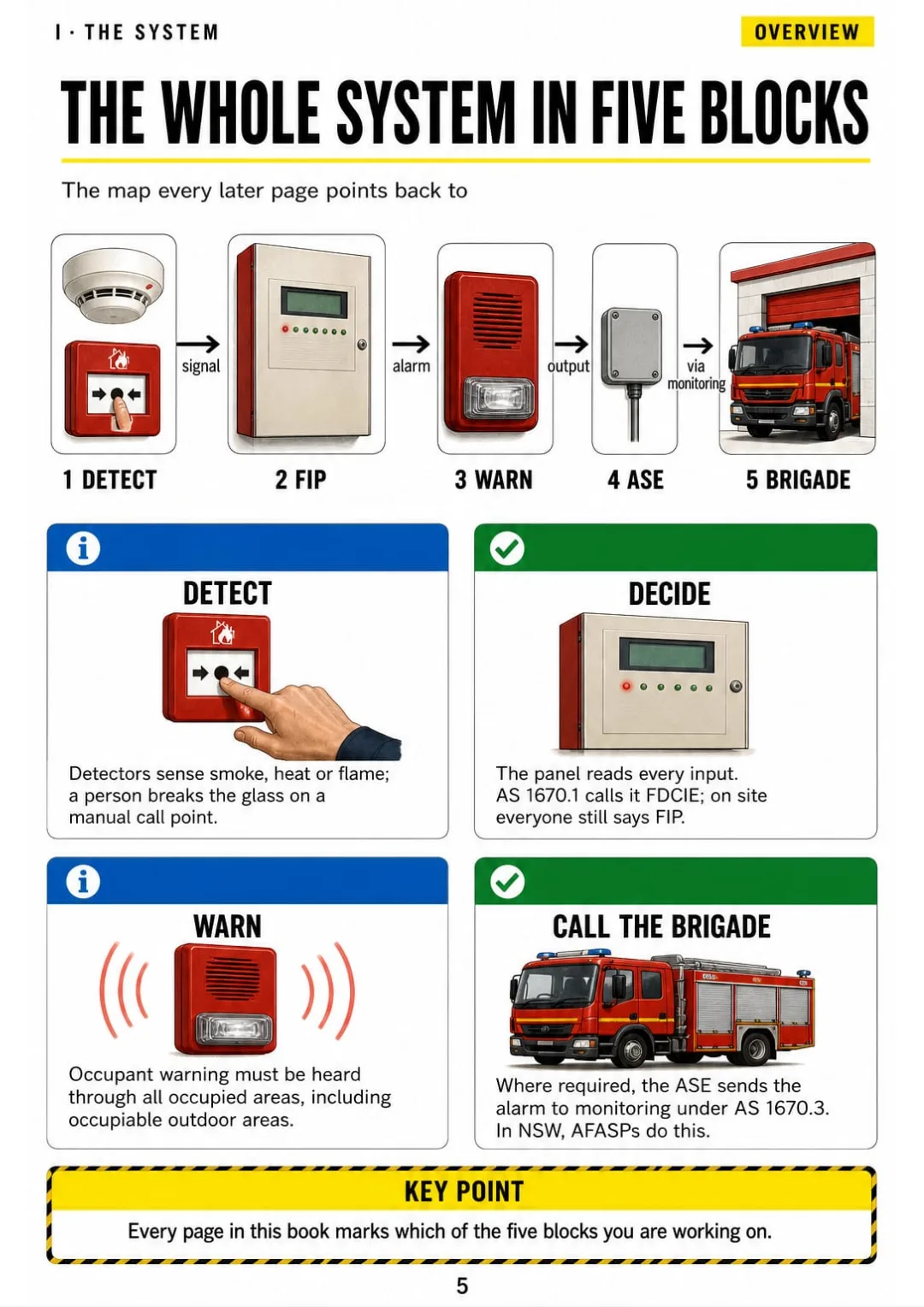
The whole system as one block diagram, fire alarm vs smoke alarm, which standard covers what, how a fire grows, zones, addresses and loops, and the words you need to know cold.
Choosing a detector in 4 steps, photoelectric, ionisation, heat, multi-criteria, beam, aspirating and flame detectors, manual call points and the spaces that need thinking.
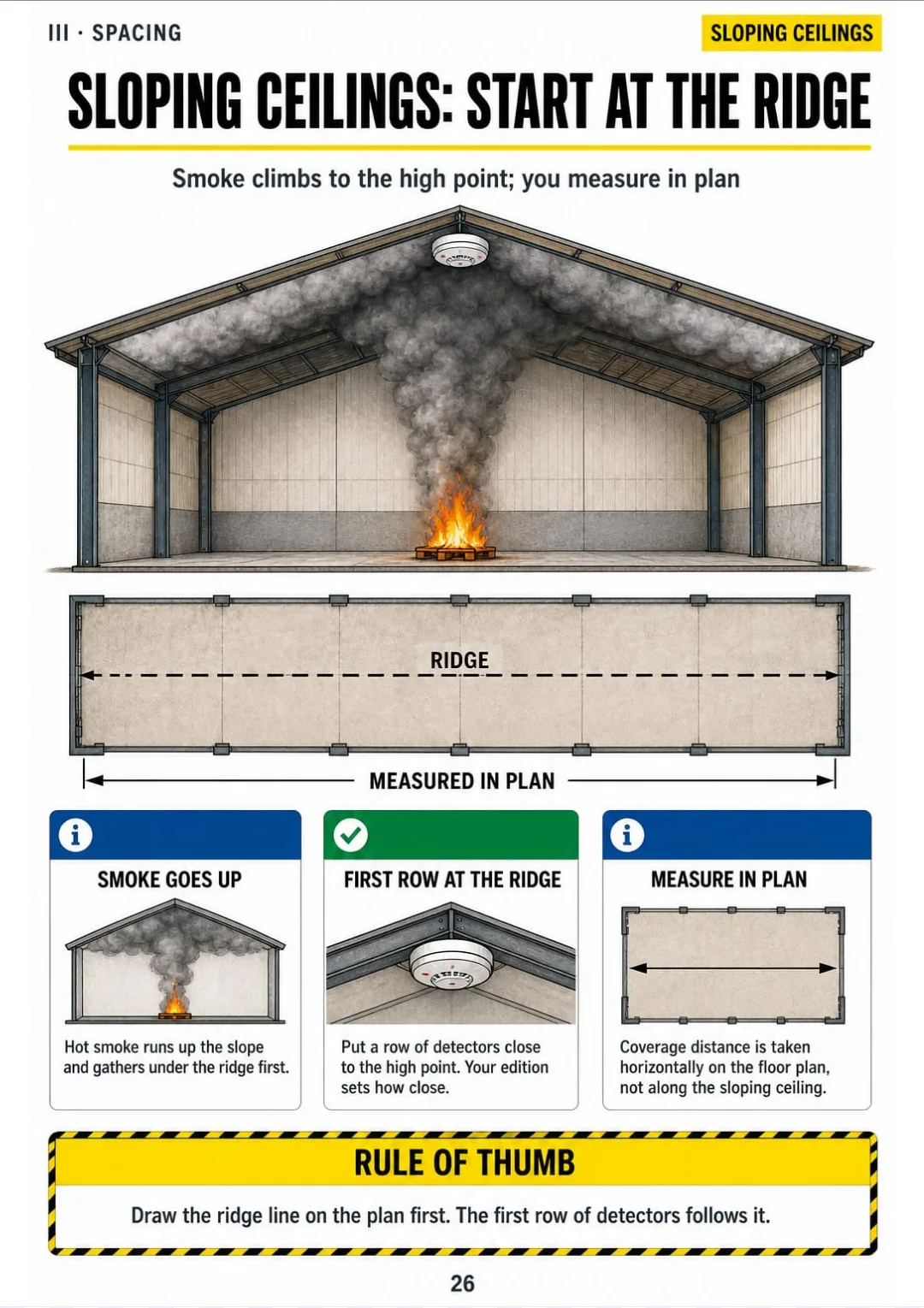
The coverage rule, laying out a room step by step, walls and dead-air space, corridors, beams, sloping and high ceilings, air movement and concealed spaces.
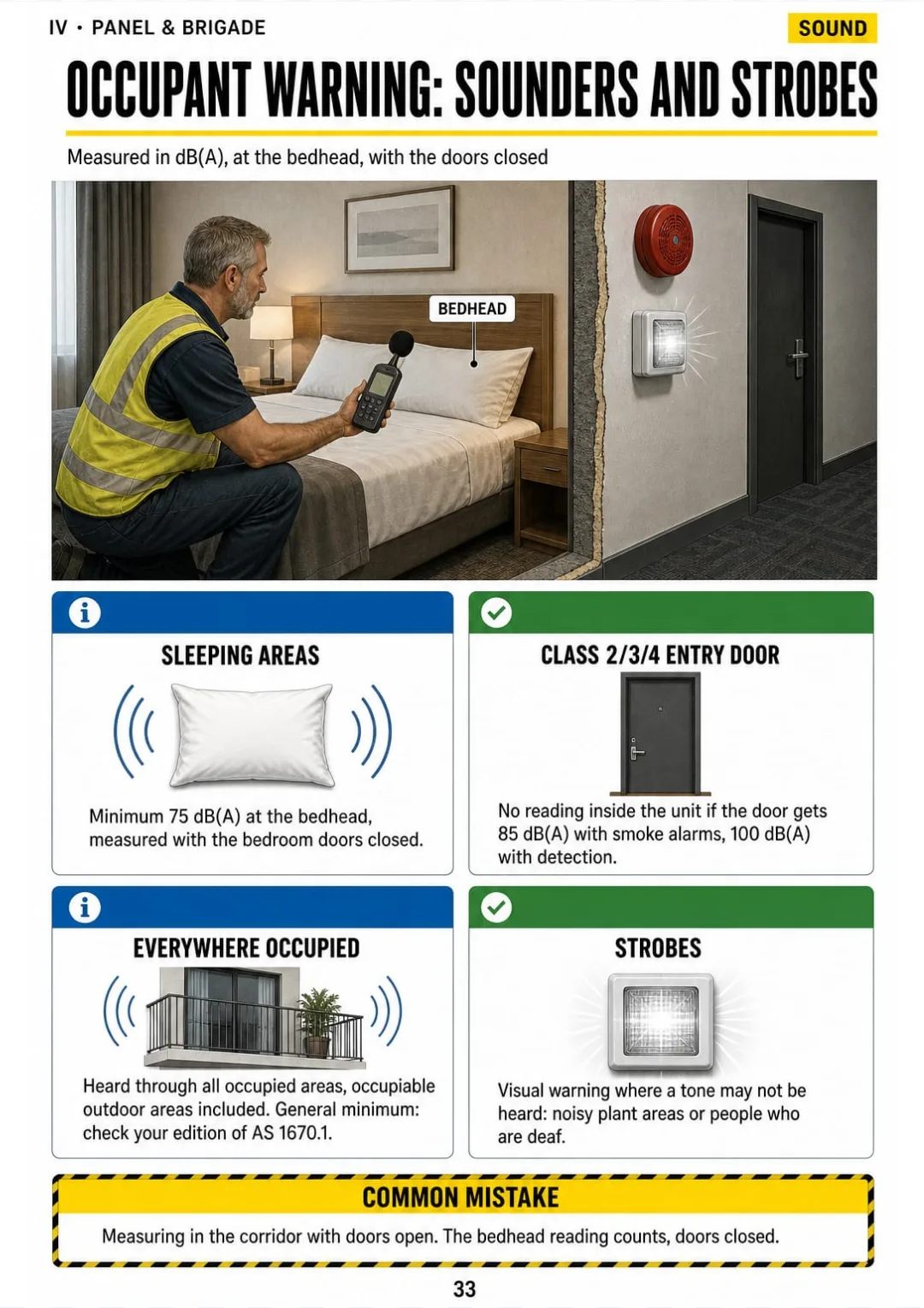
Inside the fire indicator panel, panel states, alarm verification, sounders and strobes, EWIS, brigade connection, ancillary controls, mimic panels and block plans.
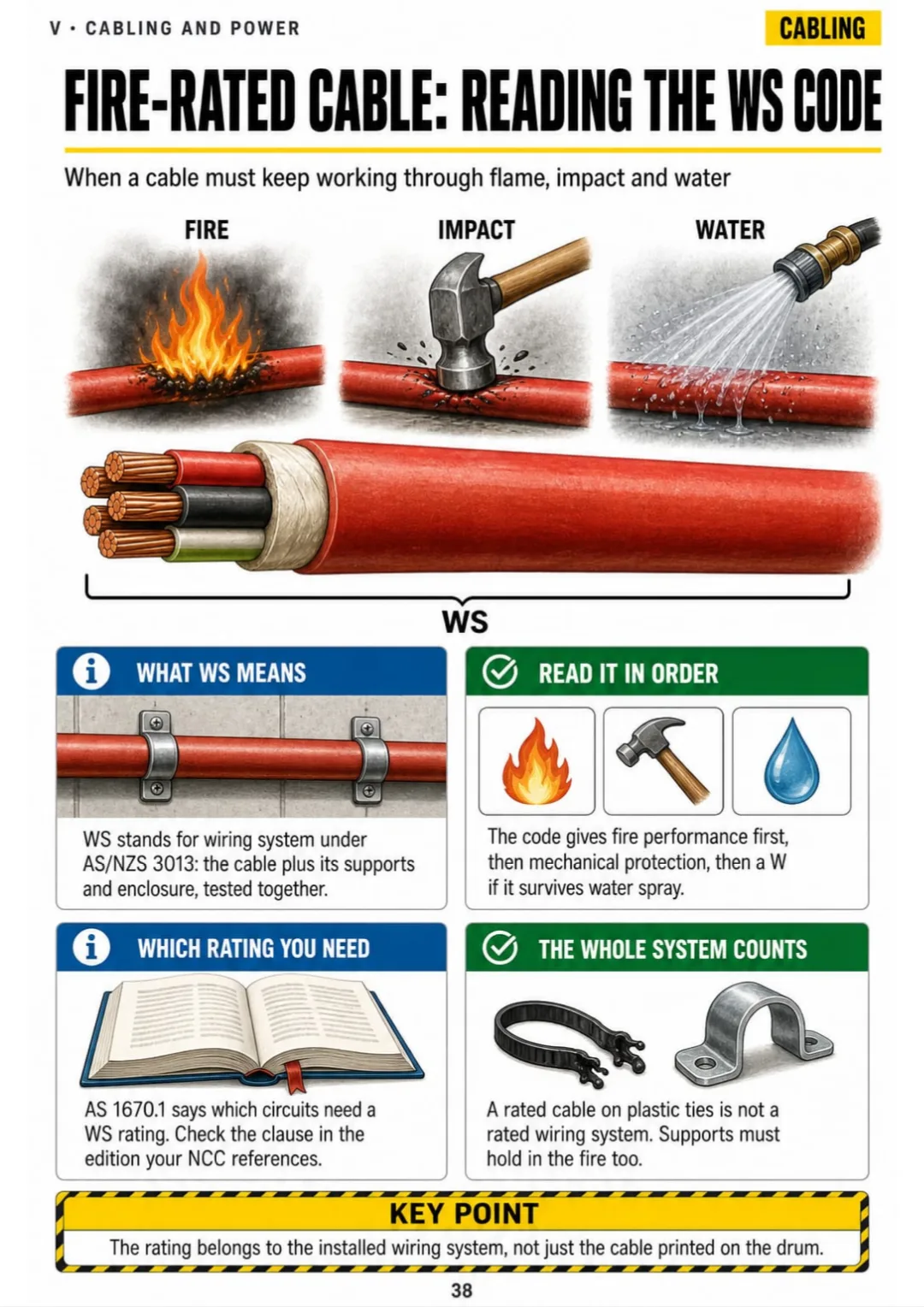
Fire-rated cabling and the WS code, zone wiring and end-of-line devices, addressable loops and isolators, segregation, mains supply, battery standby with a worked example, and voltage drop.
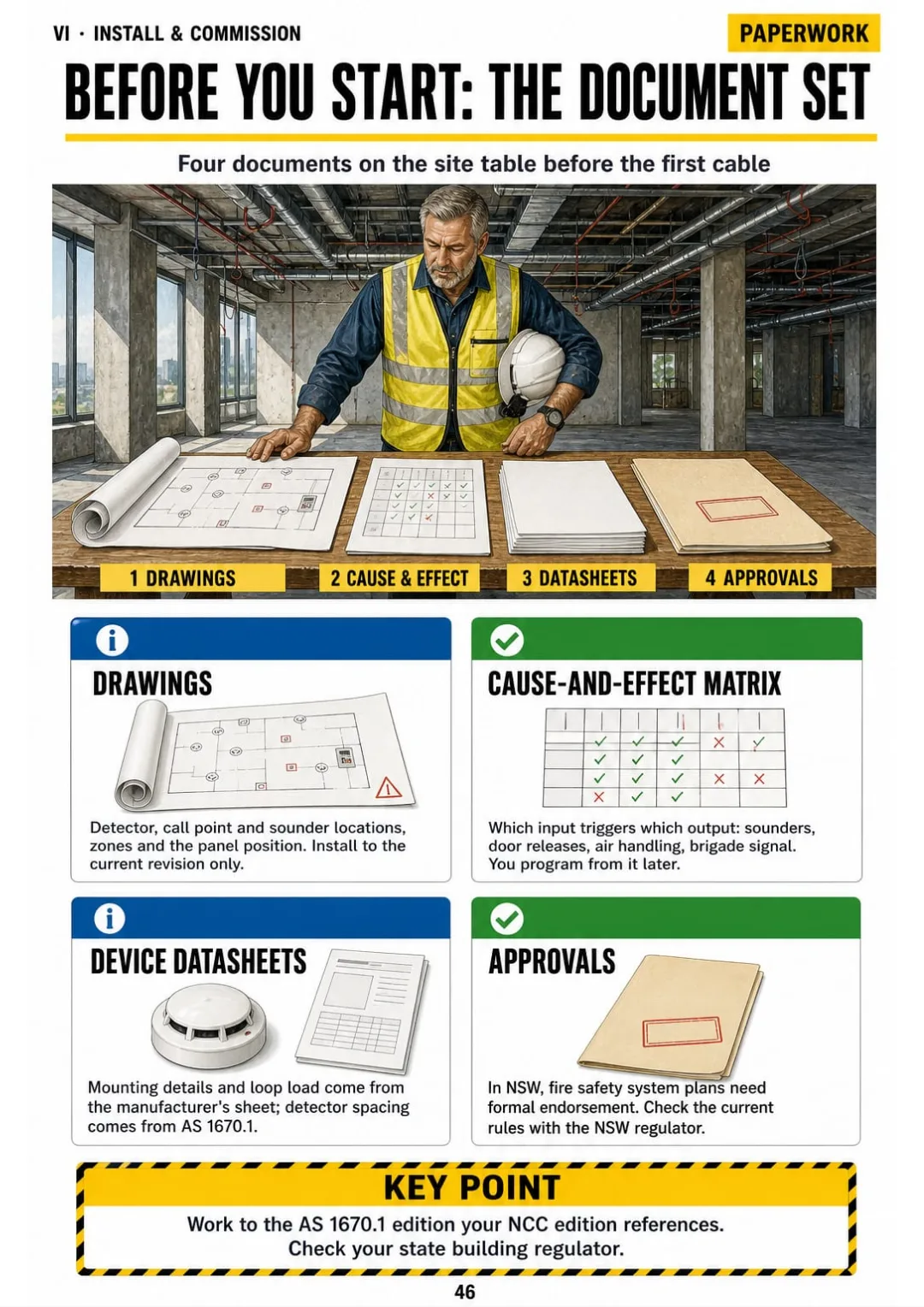
The document set before you start, mounting detectors, commissioning in the same order every time, testing every device, the sound level survey and handover.
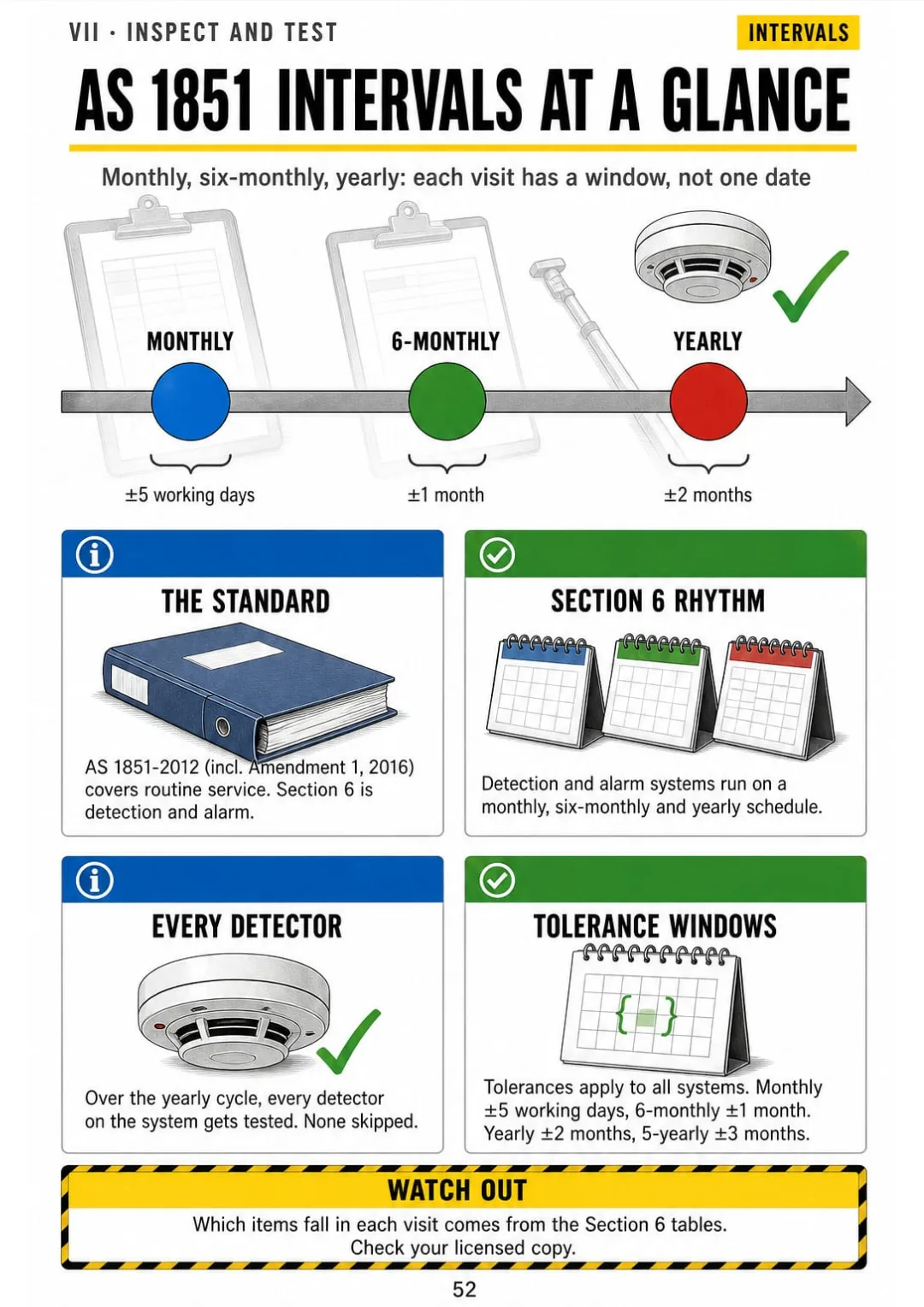
The AS 1851 intervals, the monthly visit, the yearly test, test tools, isolating safely, logbook and defects, fault finding in 5 steps, earth faults, open and short circuits, and false alarms.
Pathways in Australia, NSW practitioner accreditation, the QBCC licence in Queensland, how assessments usually ask questions, one-page revision, the most frequent site mistakes and a final checklist.
At the end of the book: A one-page spacing and battery revision sheet and a final sign-off checklist.
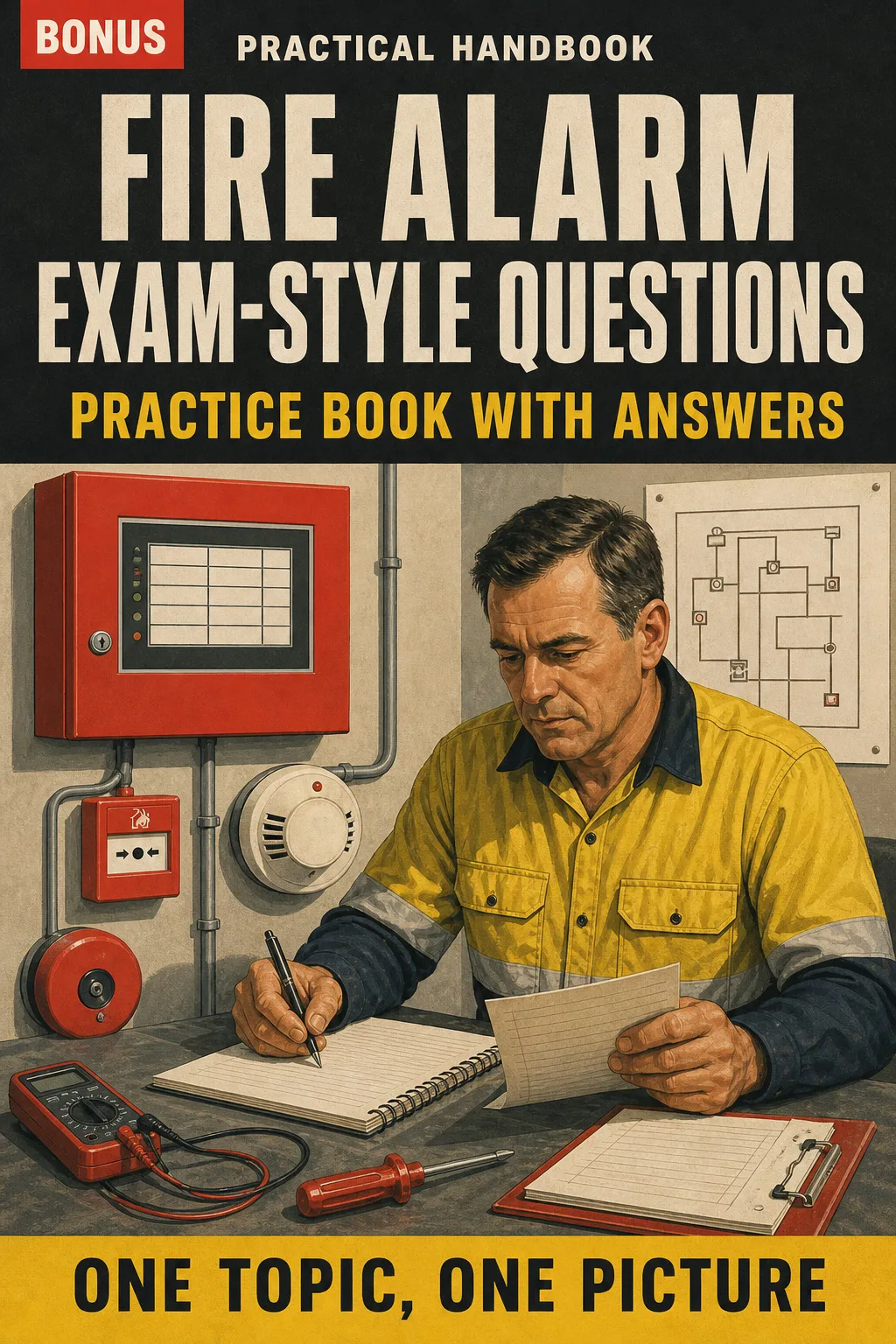
Test yourself topic by topic on detectors, spacing, panels, batteries and inspect and test, with every answer explained, so you find the gaps before the assessment does.

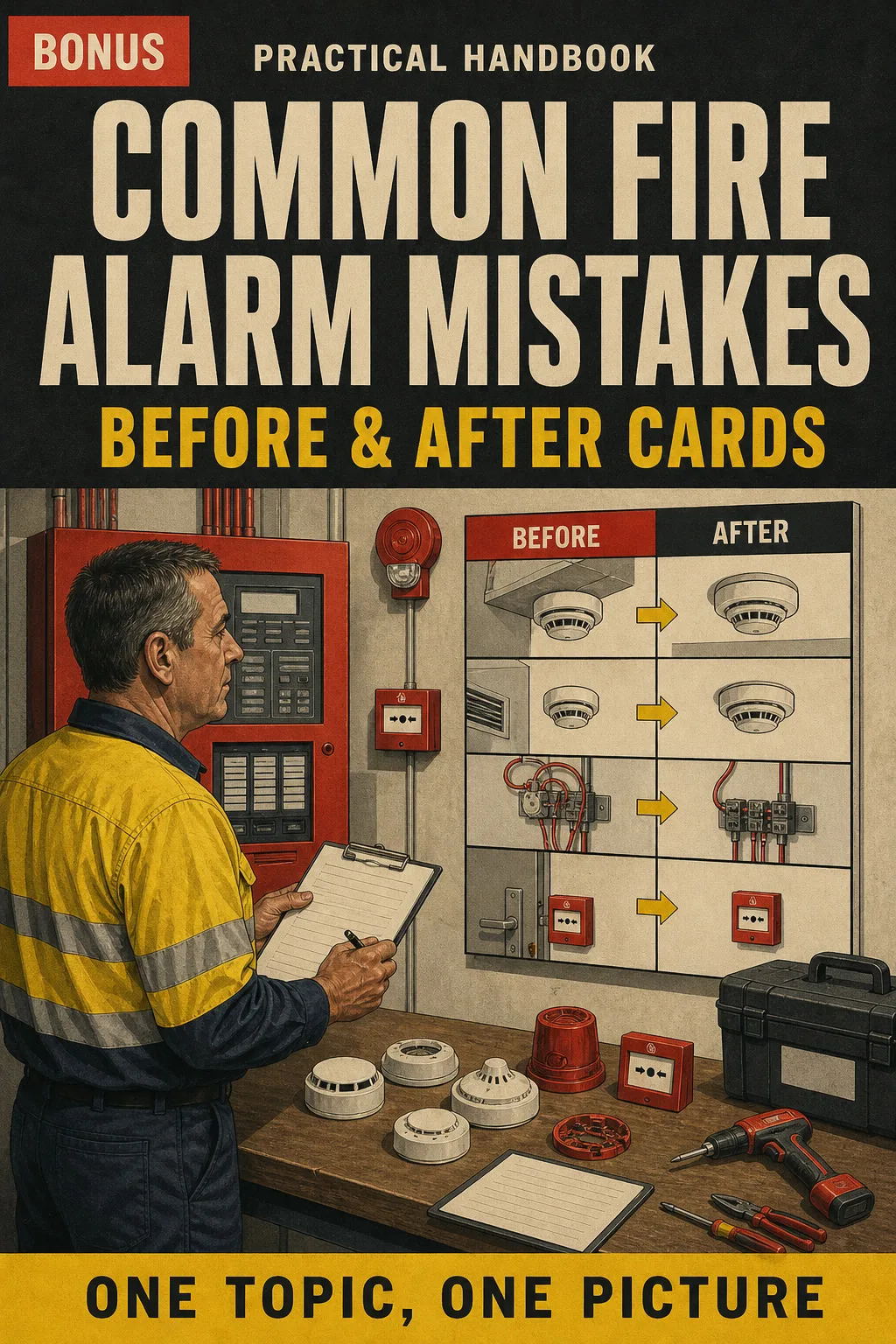
The most frequent install and maintenance mistakes, each drawn wrong and then right on one card, so you can revise them in minutes before an assessment or a job.
📄 This is a digital PDF book sent to your email: nothing is printed or shipped.
PDF by email: We email you Fire Alarm Systems Illustrated as a PDF, together with the two free books. It's a single payment: no installments, no extra charges.
Coming from electrical or maintenance, you get the whole system as one diagram first, then each part on its own page.
You revise spacing, batteries and intervals in the same order every time, then test yourself topic by topic with the practice book.
You keep it in the ute for the jobs you don't do every week: a beamed ceiling, a battery calculation, an earth fault.
📄 This is a digital PDF book sent to your email: nothing is printed or shipped.
Try Fire Alarm Systems Illustrated for 30 days, bonus books included.
We refund everything if the file won't open, if the book isn't what you see here, if you were charged twice or if the email doesn't arrive. Just email us.
You pay once. No subscriptions.
Yes. It isn't a beginner's course, and it's written for Australia, not adapted from another country. It puts the whole system in order, from detector to brigade, so the monthly jobs connect with the ones you rarely see: beamed ceilings, battery standby, commissioning. Part 8 covers the pathways: NSW fire safety practitioner accreditation and the QBCC licence in Queensland, and how their assessments usually ask questions.
It's checked against the editions in force when the book was prepared: AS 1670.1:2018, AS 1851:2012, AS/NZS 3013 and the current National Construction Code, plus the requirements published by NSW and the QBCC. The edition behind each topic is named in the book. Everything is explained with our own drawings and examples, without reproducing the text or tables of the Standards.
No. It's an independent illustrated study book. It isn't published or endorsed by Standards Australia, FPA Australia, the QBCC, NSW Fair Trading or any other body.
No. It doesn't replace accredited training, supervised work on site or the Standards themselves, and it doesn't give you a certificate, a licence or CPD points. It's what you revise with, at night or in the ute.
No. They're written for this book, topic by topic, to help you find your gaps. They aren't official questions from any assessment.
The book and the 2 bonus books arrive as PDFs by email, to the address you enter at checkout.
No. It's a one-off payment, with no subscription.
Yes. The PDF is ready to print at home or at a print shop, so you can keep it in the ute.
You have 30 days. We refund everything if the file won't open, if the book isn't what you see on this page, if you were charged twice or if the email doesn't arrive: just email us.
No more rereading the standard and losing it by the next day.
Detector spacing, you see it drawn and that's it.
You walk into the assessment or onto site knowing where everything is.
Drawings make studying faster.
The book is right below.
One-time payment: US$ 27 · Guarantee: 30 days · PDF by email
YES, I WANT FIRE ALARM SYSTEMS ILLUSTRATED FOR US$ 27📄 This is a digital PDF book sent to your email: nothing is printed or shipped.